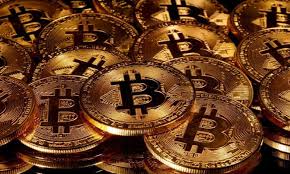
Bitcoin is the world’s first decentralized digital currency and one of the most influential financial innovations of the 21st century. Since its introduction in 2009, Bitcoin has challenged traditional ideas about money, banking, and trust. Built on cryptography and powered by a global network of computers, Bitcoin allows people to send and receive value over the internet without relying on banks or governments. This revolutionary concept has sparked intense debate, rapid adoption, and the creation of an entirely new industry.
The Origin of Bitcoin
Bitcoin was introduced in October 2008 through a white paper titled “Bitcoin: A Peer-to-Peer Electronic Cash System” published by an unknown individual or group using the name Satoshi Nakamoto. The timing was significant: the global financial crisis had exposed weaknesses in the traditional banking system, including excessive centralization and lack of transparency.
In January 2009, the Bitcoin network went live with the mining of the first block, known as the genesis block. Embedded in that block was a message referencing a newspaper headline about bank bailouts, widely interpreted as a critique of the existing financial system. Since then, Bitcoin has grown from an obscure experiment into a global phenomenon.
How Bitcoin Works
At its core, Bitcoin operates on a technology called blockchain. A blockchain is a public, distributed ledger that records all Bitcoin transactions in chronological order. Instead of being stored on a single server, this ledger is maintained by thousands of computers (called nodes) around the world.
Transactions are grouped into blocks and added to the blockchain through a process known as mining. Miners use computational power to solve complex mathematical problems. The first miner to solve the problem gets the right to add the new block to the blockchain and is rewarded with newly created bitcoins plus transaction fees. This process secures the network and prevents fraud, such as double spending.
Bitcoin uses cryptography to ensure security and ownership. Each user has a digital wallet containing a public key (used to receive Bitcoin) and a private key (used to sign transactions). Control over the private key means control over the funds.
Decentralization and Trust
One of Bitcoin’s most important features is decentralization. Traditional currencies are controlled by central banks, which can print money, set interest rates, and influence the economy. Bitcoin, by contrast, is governed by code and consensus.
No single entity controls Bitcoin. Changes to the network require agreement from the majority of participants, making it resistant to censorship and manipulation. This decentralized structure allows users to transact directly with one another, without intermediaries such as banks or payment processors.
Trust in Bitcoin does not come from institutions, but from mathematics, open-source software, and global participation. Anyone can verify transactions and inspect the code, making the system transparent and auditable.
Bitcoin as Money
Bitcoin was originally designed as a digital form of cash, but its role has evolved. Today, Bitcoin is often compared to gold rather than everyday currency. This is largely due to its limited supply and store-of-value characteristics.
The total supply of Bitcoin is capped at 21 million coins, a limit written into the protocol. This scarcity makes Bitcoin resistant to inflation, unlike fiat currencies that can be printed in unlimited amounts. Approximately every four years, the reward for mining new blocks is cut in half in an event called the halving, which further reduces the rate of new supply.
Because of this predictable and limited issuance, many investors view Bitcoin as a hedge against inflation and economic uncertainty. However, its price volatility has made it less practical for daily transactions in many cases.
Adoption and Use Cases
Bitcoin adoption has grown steadily over the years. Individuals use Bitcoin for investment, international remittances, online purchases, and savings outside the traditional banking system. In countries with high inflation or strict capital controls, Bitcoin can offer financial access and protection.
Businesses increasingly accept Bitcoin as a payment method, either directly or through payment processors. Major institutions, including publicly traded companies and investment funds, have also added Bitcoin to their balance sheets or offered Bitcoin-related products.
In 2021, El Salvador made history by becoming the first country to adopt Bitcoin as legal tender, highlighting its potential role in national economies, though the decision has also faced criticism and challenges.

Challenges and Criticism
Despite its advantages, Bitcoin faces several challenges. Price volatility remains a major concern, with sharp price swings making it risky for some users. Scalability is another issue, as the Bitcoin network can process only a limited number of transactions per second compared to traditional payment systems.
Bitcoin mining has also been criticized for its energy consumption. Mining requires significant computational power, leading to high electricity usage. Supporters argue that mining increasingly uses renewable energy and incentivizes efficient energy production, while critics see environmental impact as a serious issue.
Regulatory uncertainty is another obstacle. Governments around the world are still deciding how to regulate Bitcoin, balancing innovation with concerns about money laundering, taxation, and consumer protection.
The Future of Bitcoin
The future of Bitcoin remains a topic of intense debate. Supporters believe it will continue to grow as a global store of value and possibly a reserve asset, similar to digital gold. Ongoing technological developments, such as the Lightning Network, aim to improve transaction speed and reduce fees, making Bitcoin more usable for everyday payments.
Critics argue that Bitcoin could be replaced by more efficient cryptocurrencies or restricted by regulation. However, Bitcoin’s first-mover advantage, strong security, and widespread recognition give it a unique position in the digital asset ecosystem.
Conclusion
Bitcoin represents a radical shift in how people think about money and trust. By combining cryptography, decentralization, and economic incentives, it has created a financial system that operates without central authority. While challenges remain, Bitcoin has already proven its resilience and impact.
Whether viewed as a technological breakthrough, an investment asset, or a social experiment, Bitcoin has permanently changed the global conversation about finance. As the world continues to digitalize, Bitcoin’s role in shaping the future of money will remain significant and closely watched.
Leave a Reply